# Global Responsible Textile Standard (GRTS)
## The textile processing standard for responsible fibres
The Global Responsible Textile Standard (GRTS) is a globally recognised certification for textiles made with certified responsible fibres.
Developed by Global Standards, the non-profit organisation behind GOTS (Global Organic Textile Standard), GRTS extends the proven GOTS programme to fibres certified to recognised responsible fibre production standards, including natural, recycled and regenerated fibre categories.
Building on this foundation, GRTS applies the same rigorous environmental, chemical, human rights including social criteria , traceability and certification requirements across the textile value chain through to the finished product.
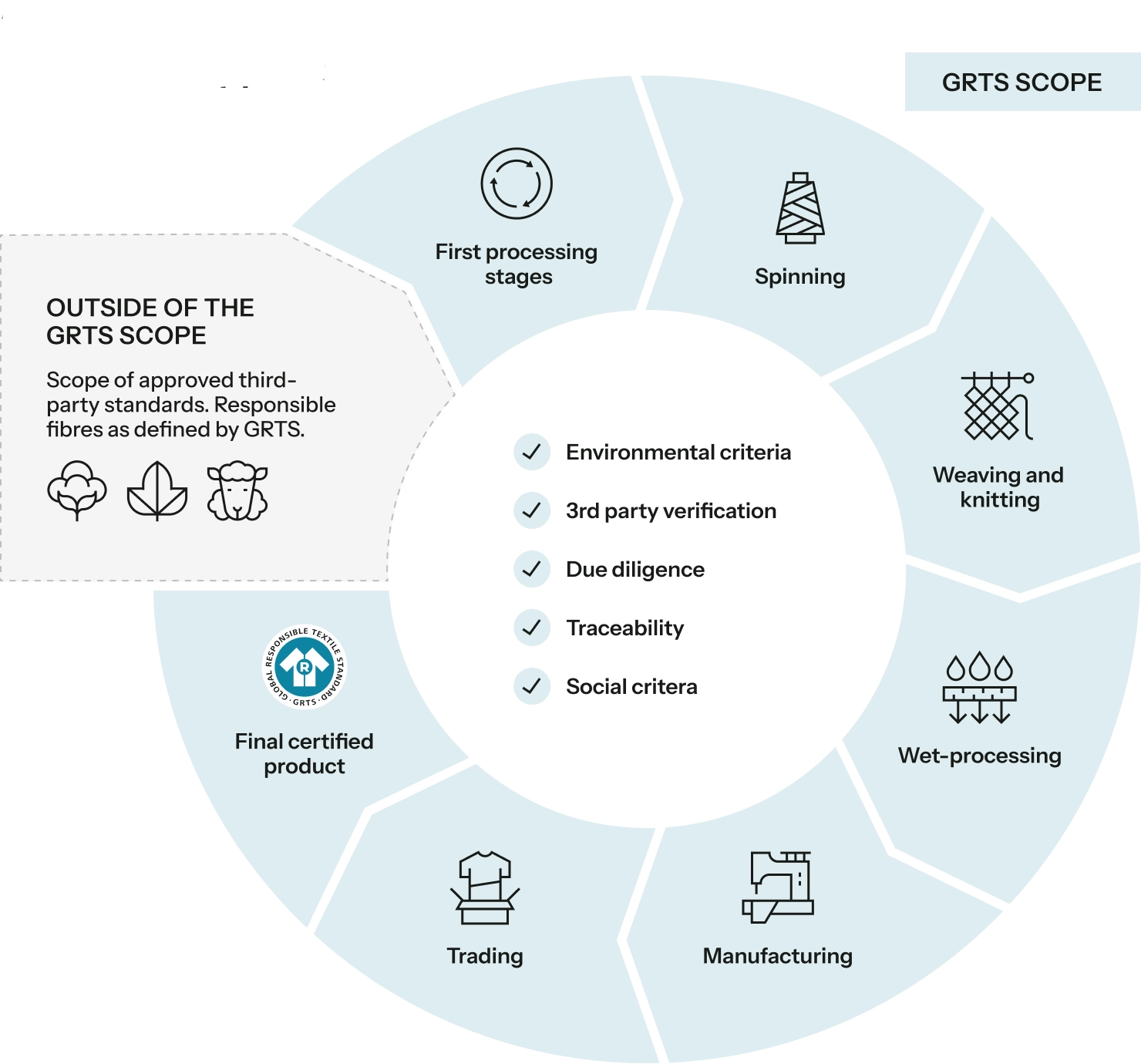
GRTS enables companies to apply one consistent and credible programme across both organic and non-organic product lines. Like GOTS, GRTS covers every stage of textile processing and manufacturing, from fibre processing to finished product, under independent third-party certification.
## Which requirements does GRTS define?
- the use of certified responsible fibres
- chemical inputs and environmental management
- wastewater treatment and responsible processing
- human rights including social criteria
- due diligence criteria based on internationally recognised norms and frameworks
- traceability and transparent product flow documentation
GRTS requires annual on-site audits of certified facilities and transaction-based verification systems to help ensure integrity throughout the supply chain.
Today, GRTS provides textile companies with a globally recognised programme for responsible textile production beyond organic fibres.
## Helpful links about GRTS
- [Learn more about GRTS](https://global-standards.org/index.php?Itemid=1366)
- [Benefits of GRTS](https://global-standards.org/index.php?Itemid=1369)
- [Key Features of GRTS](https://global-standards.org/index.php?Itemid=1368)
- [Download GRTS resources](https://global-standards.org/index.php?Itemid=1370)
- [How to get certified](https://global-standards.org/index.php?Itemid=1381)
- [Contact a Global Standards Representative in your region](https://global-standards.org/index.php?Itemid=1359)
- [Access full FAQs](https://global-standards.org/index.php?Itemid=1395)
## FAQs around GRTS
Which fibres and fibre production standards are recognised under GRTS? GRTS applies to textiles made with fibres certified to recognised responsible fibre production standards that are processed under strict environmental, human rights including social criteria along the entire value chain. GRTS products must contain at least 90% recognised responsible fibres.
To qualify as “responsible” under GRTS, fibres must meet key criteria including:
- third-party certification,
- an identity-preserved chain of custody, meaning certified material remains identifiable and traceable throughout the supply chain
- non-GMO requirements,
- restrictions on highly hazardous pesticides,
- animal welfare safeguards including no mulesing, and
- responsible sourcing requirements for forestry-based and bio-based materials.
Eligible fibre categories for GRTS include
- natural plant and animal fibres
- regenerated cellulosic fibres,
- recycled natural and synthetic fibres,
- biopolymers and
- certified organic or organic in-conversion fibres below GOTS thresholds. This approach enables more fibre flexibility while maintaining strict environmental, social and traceability requirements across the entire textile supply chain.
What is the difference between GOTS and GRTS? GOTS applies the Global Standards certification system to textiles made with certified organic fibres, while GRTS extends the same system to textiles made with fibres certified to additional recognised responsible standards.
Both standards use the same underlying certification, environmental, social, traceability and integrity system developed by Global Standards. This allows companies to apply one consistent system across both organic and non-organic product lines.
Can companies use both GOTS and GRTS? Yes. Companies can use both GOTS and GRTS across different product lines while operating within one aligned certification system. This enables brands, manufacturers and suppliers to manage organic and other responsible fibre products under a consistent system for certification, traceability and compliance.
Companies seeking certification to both standards can undergo a single combined audit, reducing administrative effort while maintaining the integrity of both certification schemes.
Can a product carry both the GOTS and GRTS label? No. GOTS and GRTS are separate product certifications with different fibre eligibility requirements, and a product can only be certified to one of the two standards. However, companies can operate both certifications in parallel across different product lines, allowing them to apply one consistent certification, traceability and compliance system across their broader textile portfolio.
How does GRTS support regulatory compliance? GRTS integrates due diligence principles aligned with internationally recognised frameworks such as the OECD Guidelines and UN Guiding Principles on Business and Human Rights. The standard helps companies strengthen supply chain oversight, support credible sustainability claims and prepare for increasing environmental and human rights regulatory requirements.